

Tactile environmental navigation for blind users
Status:
Palm Writer is no longer in production or available for purchase. The system and methods are protected under U.S. Patent 10,580,321 and are available for discussion in the context of collaboration, licensing, or transfer of rights.
Overview
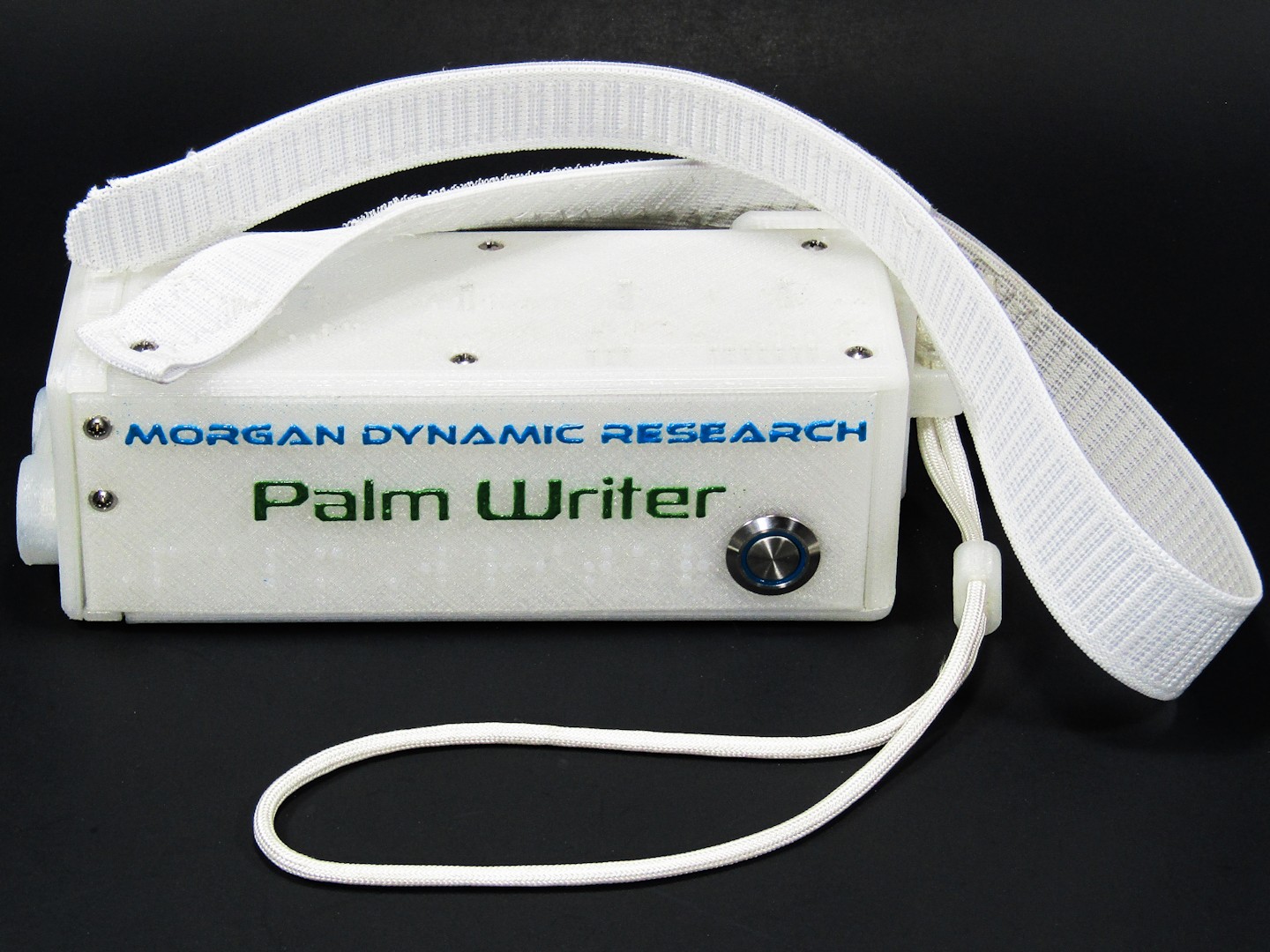
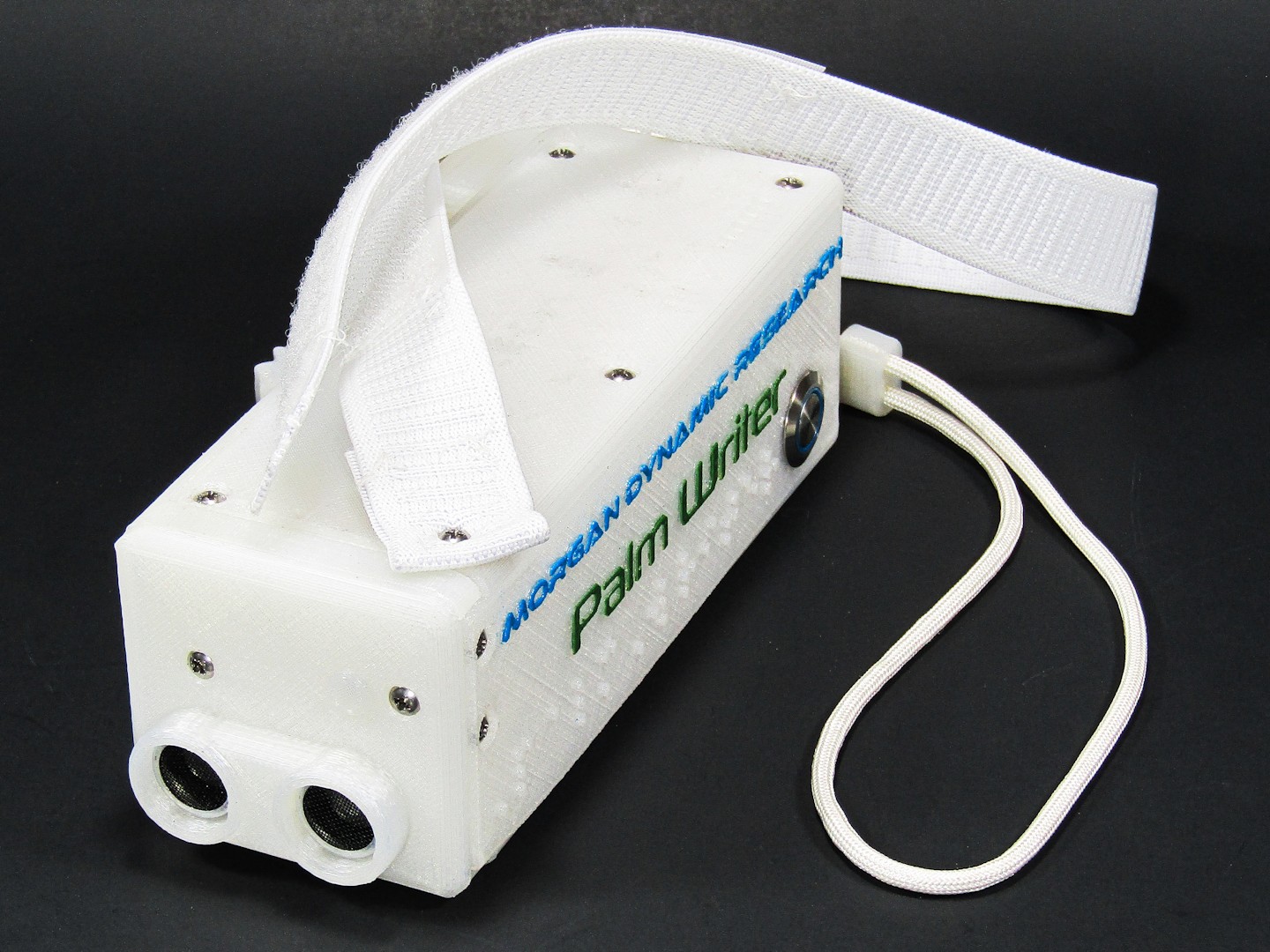
Palm Writer is a handheld environmental navigation aid for blind users. It converts distance information from the environment into precise tactile feedback in the user’s palm, so nearby structure can be felt directly rather than delivered through audio.
Development began in 2016 and led to a refined second generation design. That design was built and tested with real blind users, whose feedback shaped the ergonomics, grip system, and behavior of the device. The result is a mature, field tested assistive platform that demonstrates how rich spatial information can be delivered through touch.
Click Pictures To Enlarge
How it works
Palm Writer detects the distance to objects in front of the user and maps that distance into motion on a tactile feedback unit under the palm.
-
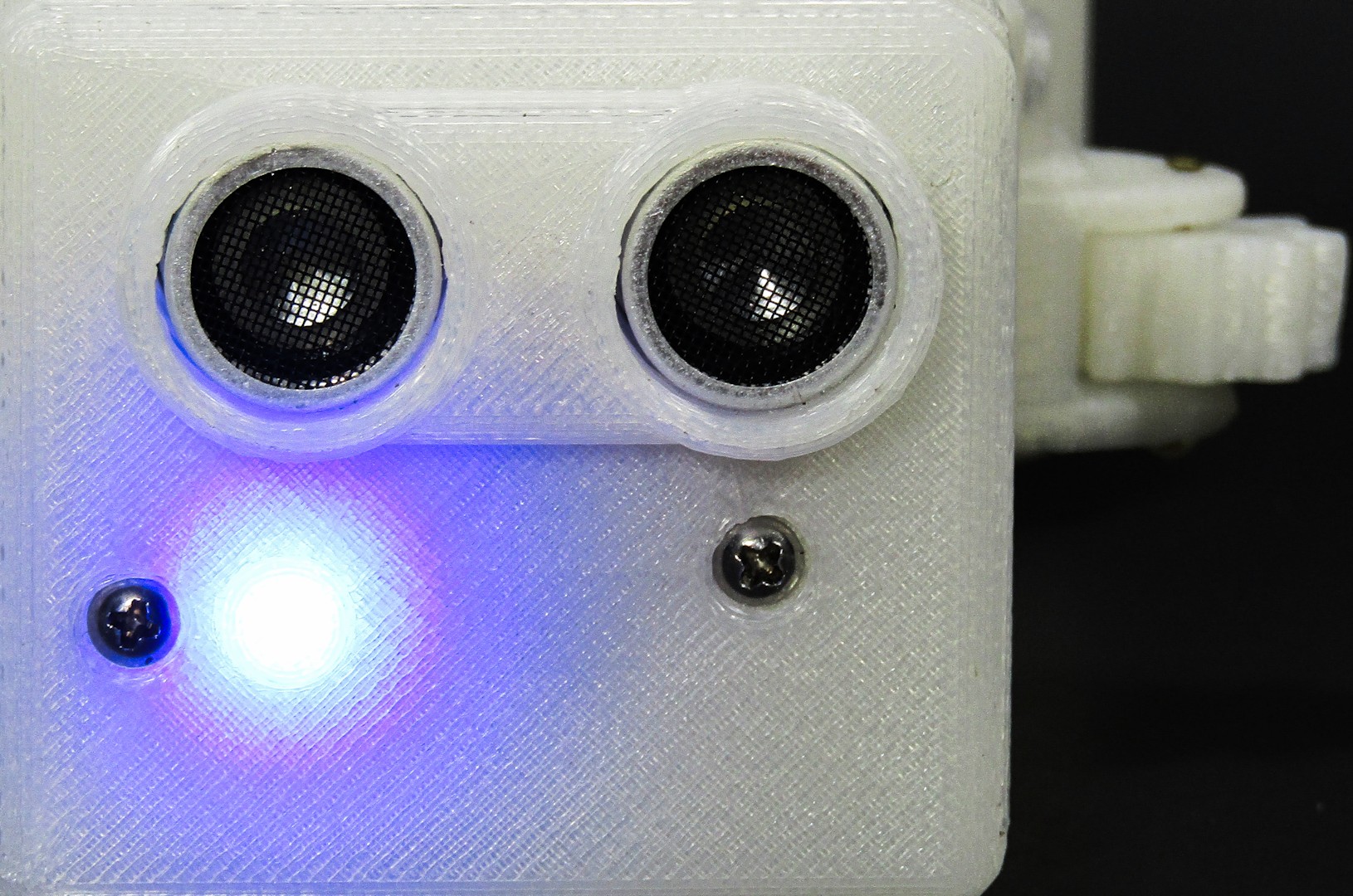
An ultrasonic range finding unit measures distance out to roughly 8 feet, about 2.4 meters, from the front of the device.
-
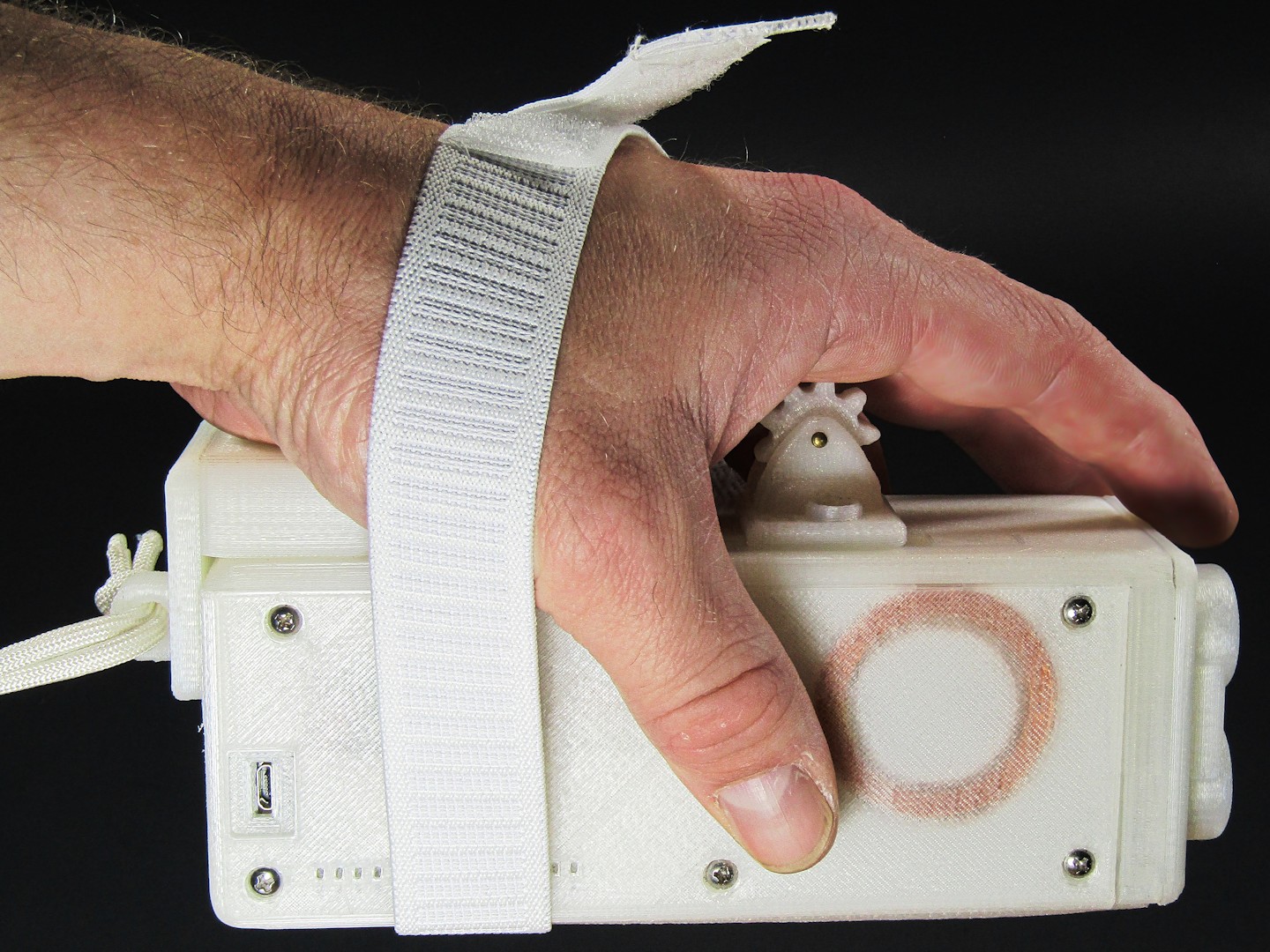
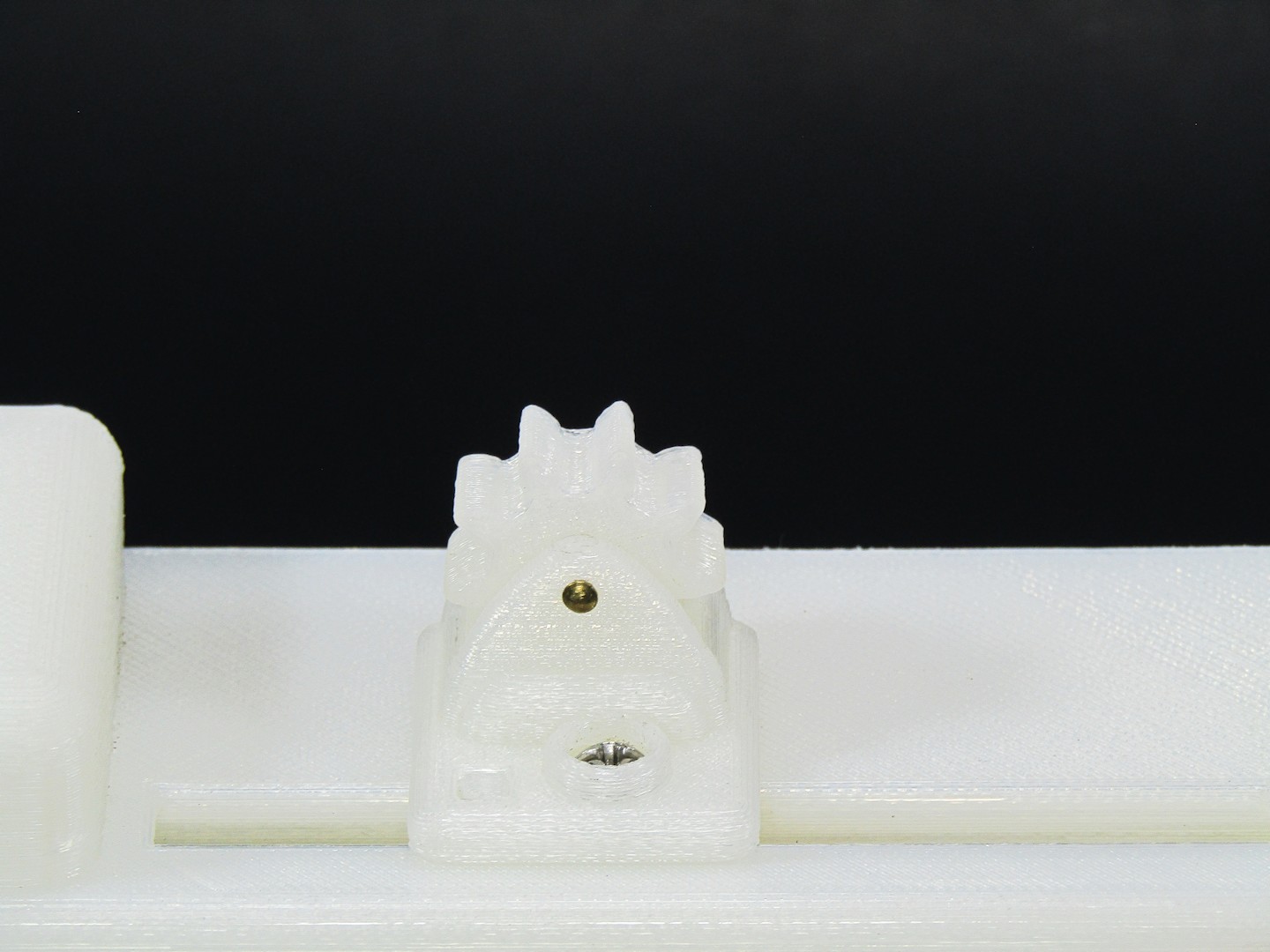
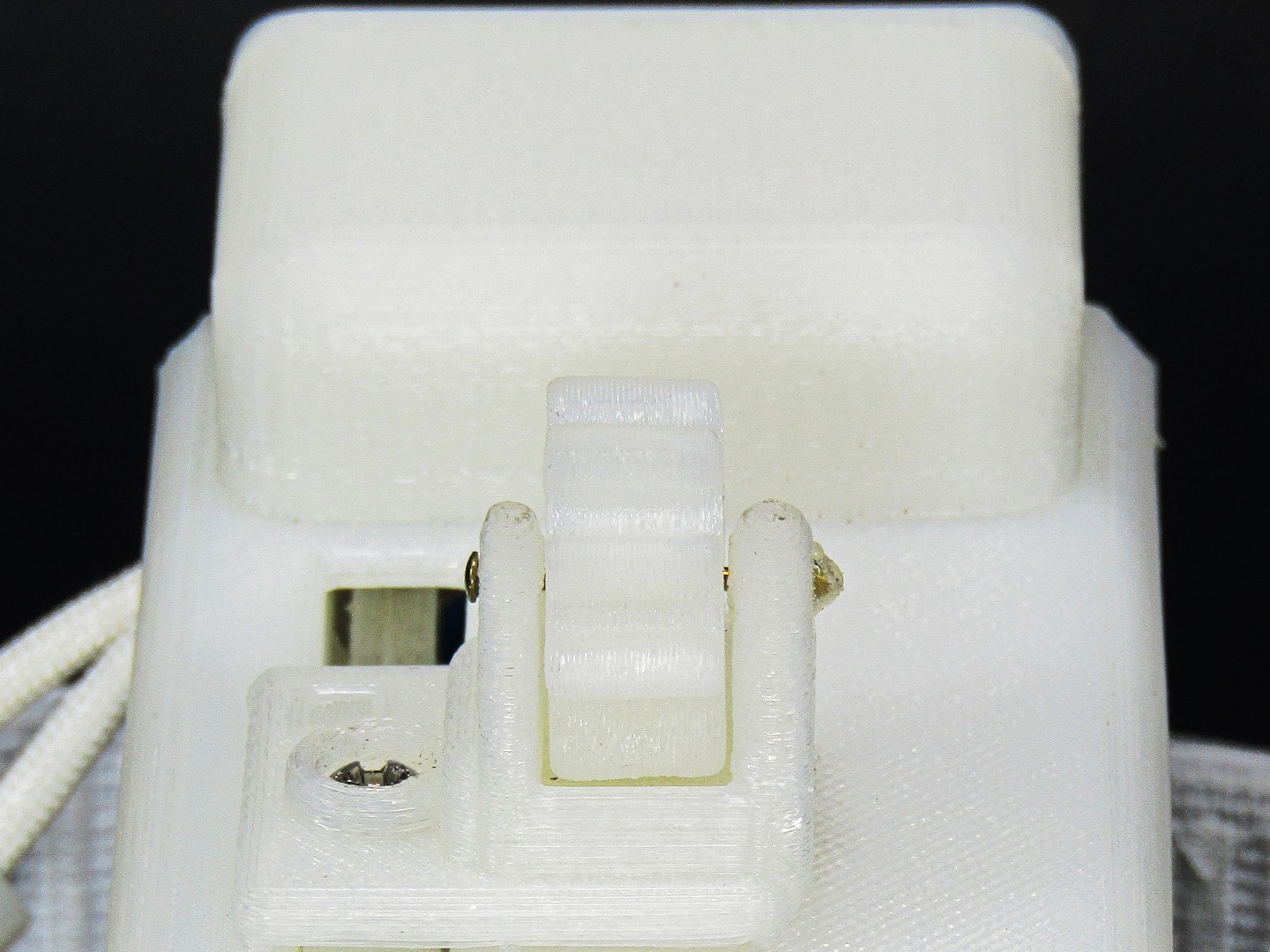
A tactile feedback unit, the writer, moves along a short linear track at the base of the palm and carries a smooth toothed wheel.
-
The position of the writer encodes distance. Closer objects move it toward the front of the device on the palm, farther objects move it toward the back near the wrist.
-
The device updates this position several times per second, which produces effectively real time scanning as the user sweeps the Palm Writer.
By moving the device and feeling the motion and position of the wheel, users can sense walls, furniture, people, overhead obstacles, and other features as a structured pattern in the palm. Because the system does not rely on audio for primary feedback, the user’s hearing remains free for the natural soundscape and social interaction.
Design and ergonomics
The second generation Palm Writer used a compact elongated cube form factor for practical reasons.
-
It sits flat on tables and other surfaces for scanning low objects.
-
It resists rolling or sliding off surfaces during use.
-
It provides sufficient internal volume for tightly packed electronics and a high capacity power cell.
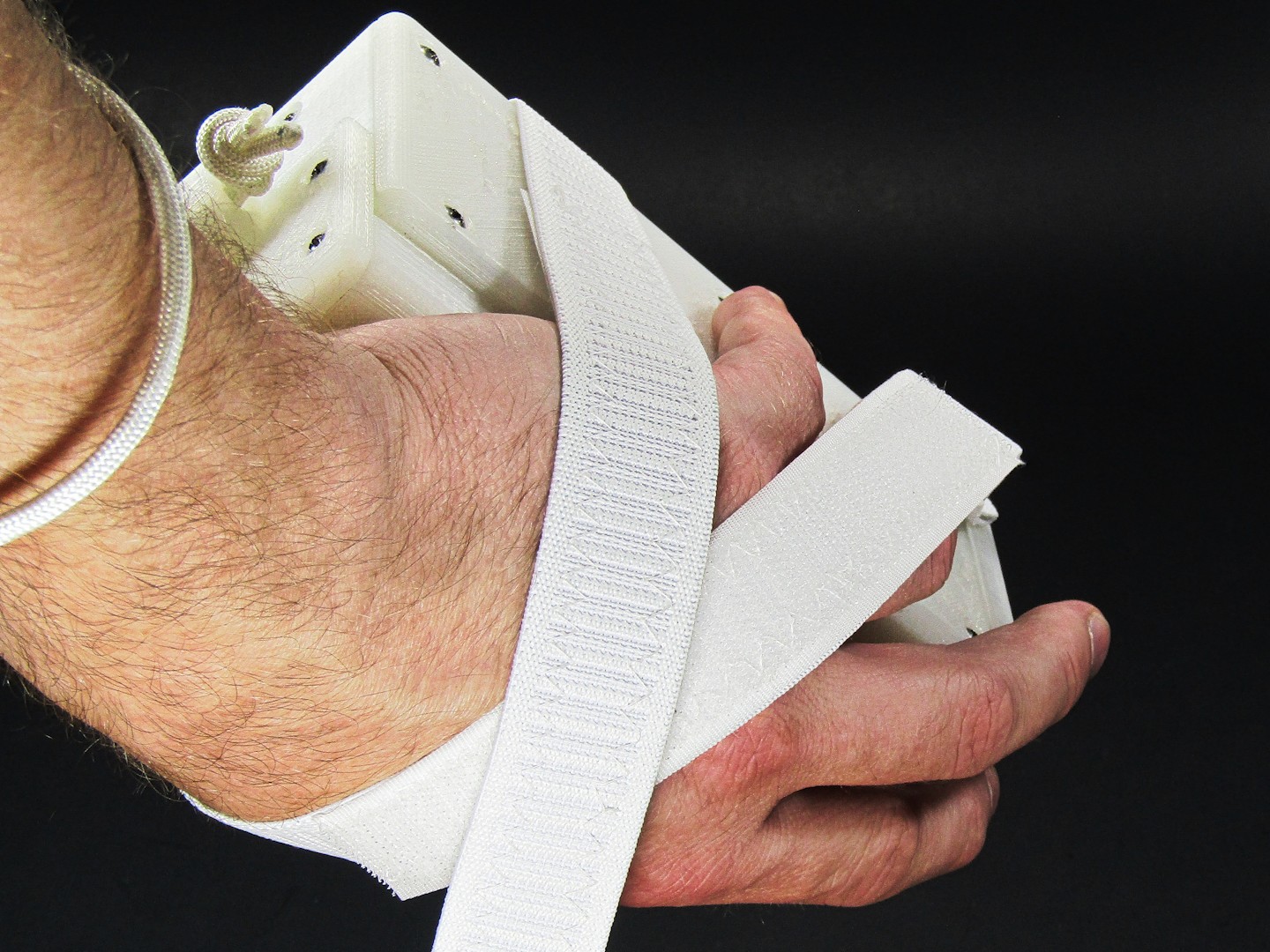
To support long term use, the second generation devices included an Ergonomic Grip Kit.
-
A wrist rest at the rear raises the wrist contact point and improves comfort and balance.
-
A flexible suspension strap arches over the back of the hand and supports the unit from multiple points, so the user does not have to grip tightly to keep it in place.
-
The design is fully ambidextrous and can be used comfortably in either hand.
These elements were tuned through direct feedback from blind beta testers who used the device in real daily life.
Key features and specifications
-
Tactile distance mapping from near contact to about 8 feet or 2.4 meters.
-
Feedback update rate on the order of 7 to 10 updates per second, depending on target material and conditions.
-
Internal lithium polymer power cell, typically 6 to 10 hours of use per charge under normal conditions.
-
Ultrasonic range sensing at about 40 kilohertz, generally outside the hearing range of dogs, cats, and birds.
-
Tactile writer travel of roughly 2.5 inches, 63.5 millimeters, along the palm.
-
Second generation units include a wrist rest and adjustable suspension strap for comfort and support.
-
Designed for operation in typical indoor and outdoor temperature ranges, splash resistant but not submersible.
Legacy materials and user experience
Over the course of development we worked closely with blind users who tested Palm Writer and helped refine its behavior and ergonomics. Selected legacy user reviews and documentation are preserved here as a record of the system and its use in the field.
For User Guide Click Here.
For Introduction Guide Click Here.
For Scanning Methods Guide Click Here.
For User Reviews Click Here.
Licensing and acquisition
The Palm Writer design covers hardware, firmware, and 3D printable structures for a complete handheld tactile navigation system. The patent, design files, and firmware can be made available to a qualified party that wishes to further develop, productize, or integrate this technology into a larger assistive platform.
Licensing, technology transfer, or acquisition of the patent and implementation package can be discussed on request. For serious inquiries, contact us.